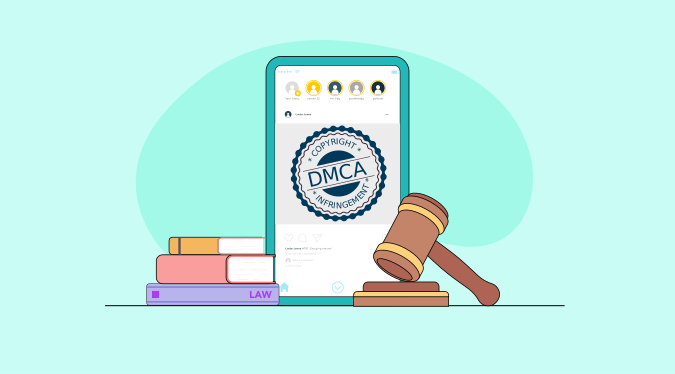
DMCA Abuse Explained: Risks, Famous Cases, and What Creators Must Know
The Digital Millennium Copyright Act (DMCA), introduced in 1998, was designed to help copyright holders protect their intellectual property in the digital era. Its main purpose is to stop piracy and unauthorized use of creative works online. The most common enforcement tool is the DMCA takedown notice, a formal request sent to platforms or hosting services demanding the removal of infringing content.
While the DMCA is a powerful tool for creators, misusing it can lead to severe legal and financial consequences. Unfortunately, false or abusive DMCA takedowns are becoming more common, often weaponized to censor critics or silence competition. Let’s explore what content creators need to know about ownership rights, fair use, and the risks of DMCA abuse.
Who Owns Copyright in Adult and Creative Content?
To file a legitimate DMCA takedown, you must either:
-
Be the copyright holder, or
-
Have explicit authorization to act on their behalf.
Here’s what that means in practice:
-
If you independently film and distribute content (e.g., via OnlyFans), you own the copyright and have full takedown rights.
-
If you performed in content for a studio (e.g., Brazzers, Naughty America) and signed a release, the studio owns the copyright—not you. Even if you are the featured performer, you can’t claim ownership.
Submitting a takedown under false pretenses is fraud and explicitly illegal. The DMCA states that notices must be submitted “under penalty of perjury,” meaning false claims can bring civil lawsuits, criminal charges, and fines.
Legal Consequences of False DMCA Takedowns
Submitting a false or abusive DMCA notice can result in:
-
Civil lawsuits for damages, defamation, or abuse of process (potentially millions of dollars).
-
Criminal penalties, including up to five years in prison and heavy fines.
-
Platform bans: Google, YouTube, and other services may suspend or terminate your accounts for fraudulent notices.
Even hiring a takedown company won’t shield you from liability if they act fraudulently on your behalf. Creators must carefully vet DMCA enforcement services, as you are ultimately legally responsible for notices filed in your name.
Famous Cases of DMCA Abuse
Two landmark cases highlight how courts treat DMCA misuse:
Sapient v. Geller
Uri Geller, a self-described psychic, filed a DMCA takedown against YouTuber Brian Sapient for posting a short clip from a PBS NOVA documentary critical of Geller. Geller didn’t own full rights to the video, and Sapient’s use was protected by fair use for commentary and criticism.
The Electronic Frontier Foundation (EFF) represented Sapient, and the court ruled that Geller knowingly misrepresented his claim. This case set an important precedent: DMCA takedowns cannot be used to silence criticism or suppress free speech.
Diebold Case (2003)
Electronic voting machine manufacturer Diebold attempted to use the DMCA to suppress leaked internal emails revealing security concerns. The company sent takedown notices to students who posted excerpts of the emails for public discussion.
A federal court ruled that Diebold’s notices were “a clear abuse of the DMCA” because no reasonable copyright holder could claim infringement over content being used for legitimate news reporting and commentary. Diebold was ordered to pay damages and attorney’s fees, further solidifying that DMCA abuse is not a tool for corporate censorship.
Best Practices for Creators
-
Know your rights: Only file takedowns for content you legally own.
-
Avoid weaponizing the DMCA: Don’t use it to remove criticism, fair use content, or competitors’ work.
-
Document ownership: Keep original files, contracts, and release forms.
-
Choose enforcement partners carefully: If hiring a DMCA service, ensure their practices are ethical and compliant.
Final Thoughts
The DMCA remains a critical tool for protecting creators, but when misused, it can backfire with devastating consequences. As these landmark cases show, courts are willing to penalize anyone—corporations or individuals—who abuse copyright law to suppress free speech or competition.
For content creators, the lesson is clear: act in good faith, understand copyright law, and protect your work without crossing legal boundaries.
With DMCA abuse becoming more common, expect more lawsuits in the coming years. If you’re serious about protecting your content, knowledge is your best defense.